

Mold Inspection in Red Bank, NJ
Red Bank's proximity to the Navesink River and year-round humid conditions create persistent moisture levels that support mold growth, particularly in the older homes common throughout the borough where basements and crawl spaces tend to accumulate dampness. A professional mold inspection identifies active growth, moisture sources, and affected materials before problems spread to other areas of your home. Early detection protects your property's structural integrity and indoor air quality.
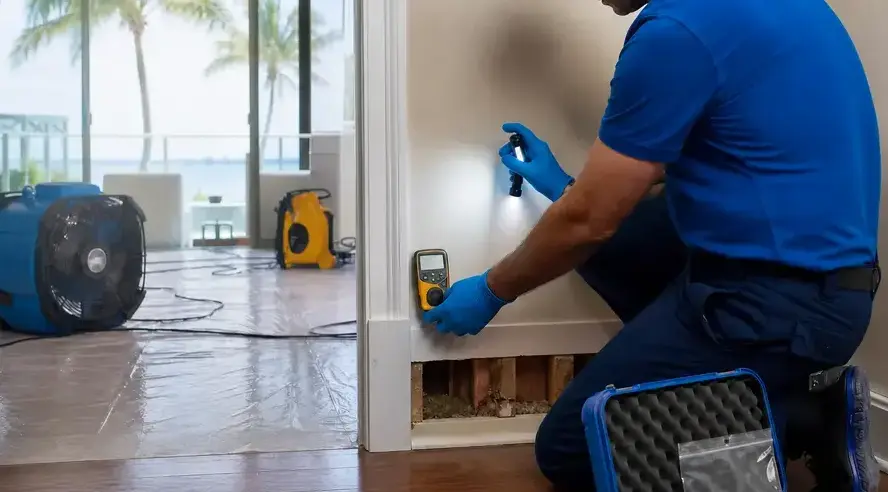
What does a mold inspection look for in Red Bank, NJ?
Before paying for sampling it is worth knowing what a result can and cannot establish. EPA publishes an answer, quoted here as written.
Surface sampling may be useful to determine if an area has been adequately cleaned or remediated.EPA
Sampling for mold should be conducted by professionals who have specific experience in designing mold sampling protocols, sampling methods and interpreting results.EPA
So sampling earns its place at the two ends of a job — confirming what is there when it is hidden, and confirming it has gone once the work is done. EPA is equally clear that it is not always needed: in most cases, if visible mold growth is present, sampling is unnecessary, and there is no federal number a result can be measured against.
In most cases, if visible mold growth is present, sampling is unnecessary.EPA
Standards or Threshold Limit Values (TLVs) for airborne concentrations of mold, or mold spores, have not been set.EPA
There is a reason to look harder here than the visible surface: Monmouth County has recorded flood events in 29 separate years, most recently in 2025. Water that arrived years ago leaves growth behind whether or not anyone found it at the time.Source: NOAA Storm Events Database, Monmouth County (1996-2026; Flood, Flash Flood and Coastal Flood events)
Mold Inspection Services for Red Bank Property Owners
Red Bank's proximity to the Navesink River and year-round humidity create conditions where moisture accumulation becomes a persistent concern for homeowners. Unlike areas with pronounced dry seasons, Red Bank maintains elevated ambient moisture levels throughout much of the year, a pattern that encourages mold growth in spaces prone to dampness. Older homes in the borough often feature basements and crawl spaces where this moisture naturally collects, making those areas frequent focal points for mold development. Early mold inspection is essential to identify growth before it spreads, affects indoor air quality, or requires more extensive remediation work.
Tipton Mold Remediation connects Red Bank property owners with independent local inspection providers who conduct thorough, methodical assessments of your home or business. The inspection process focuses on locating visible mold, identifying moisture sources, and evaluating areas where conditions favor growth—particularly in basements, crawl spaces, and other moisture-prone zones. Once an inspection is complete, you'll have a clear picture of what exists and what steps are needed next. If remediation is warranted, the same local provider can guide you through containment and removal, addressing not just the mold itself but the underlying moisture that allowed it to take hold. This coordinated approach helps ensure your indoor environment is thoroughly assessed and, when necessary, restored to safe conditions.
Why Red Bank Property Owners Choose Tipton Mold Inspection
Fast Local Mold Inspection
Tipton connects you with independent local inspectors who respond quickly to mold concerns. Rapid assessment helps identify growth early, limiting spread and protecting your property's indoor air quality.
Thorough Mold Inspection Process
Local providers conduct detailed inspections to locate visible and hidden mold, checking common trouble spots and assessing moisture sources. Complete evaluation guides safe, targeted remediation decisions.
Clear Communication Throughout Inspection
Independent inspectors explain findings in plain terms, detailing affected areas and next steps. Transparent reporting helps you understand the scope and make confident choices about remediation.
Mold Inspection for Moisture-Prone Homes
Red Bank's persistent humidity and older homes with basements or crawl spaces create elevated dampness risk. Local mold inspection identifies moisture accumulation early, preventing the indoor growth that thrives in these conditions.
How Our Mold Inspection Process Works
Schedule Your Mold Inspection Visit
Contact Tipton Mold Remediation to arrange a mold inspection at your Red Bank property. A local inspection provider will visit your home to evaluate moisture sources and visible or suspected mold growth.
Receive Your Mold Inspection Assessment
The inspector examines areas prone to moisture accumulation—particularly basements and crawl spaces, which are common starting points for mold in older Red Bank homes due to persistent dampness. You'll receive findings and recommendations for remediation if mold is present.
Connect With a Remediation Provider
Based on your mold inspection results, Tipton connects you with a local remediation provider to address the issue. The provider will outline containment and removal steps tailored to your property's specific mold condition.
Dealing with Mold Inspection in Red Bank? Get fast, professional help.
Call Now — (732) 301-9822Mold Inspection Serving Red Bank and Nearby Areas
Red Bank's proximity to the Navesink River means the borough experiences elevated moisture levels throughout much of the year, creating conditions that support indoor mold growth well beyond seasonal peaks. This persistent humidity, combined with the borough's aging housing stock, makes mold inspection particularly important for property owners. Older homes in Red Bank commonly feature basements and crawl spaces—areas where dampness accumulates naturally and becomes a frequent entry point for mold colonization. Without regular inspection, moisture in these below-grade spaces can go undetected until mold has already begun to spread to framing, insulation, and structural materials.
Mold inspection in Red Bank addresses this specific vulnerability by identifying moisture sources and early mold growth before problems become extensive. When you connect with a local inspection provider through Tipton Mold Remediation, you're working with someone who understands how Red Bank's environmental conditions affect individual properties. A thorough mold inspection maps moisture patterns, evaluates ventilation and drainage, and documents any active growth—giving you the information needed to stop mold before remediation becomes necessary or significantly more costly.
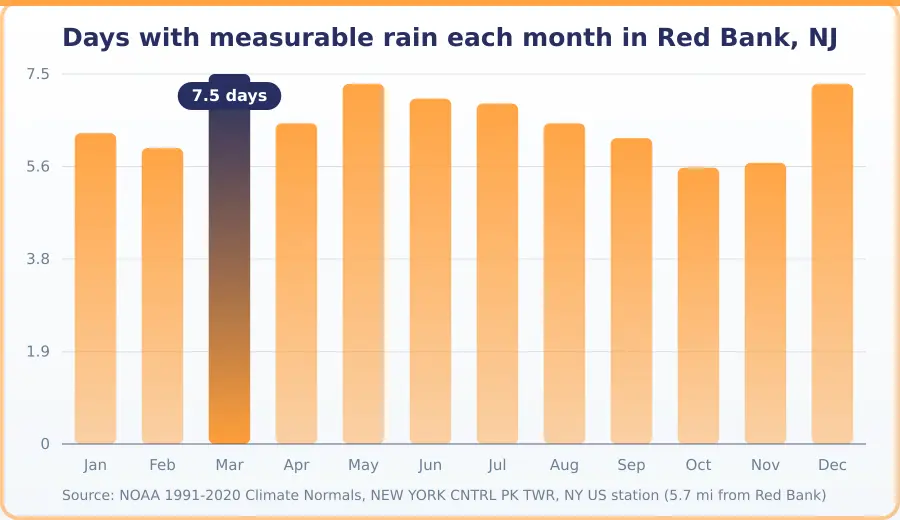
| Period | Days with measurable rain by month (days) |
|---|---|
| Jan | 6.3 |
| Feb | 6 |
| Mar | 7.5 |
| Apr | 6.5 |
| May | 7.3 |
| Jun | 7 |
| Jul | 6.9 |
| Aug | 6.5 |
| Sep | 6.2 |
| Oct | 5.6 |
| Nov | 5.7 |
| Dec | 7.3 |
Source: NOAA 1991-2020 Climate Normals, NEW YORK CNTRL PK TWR, NY US station (5.7 mi from Red Bank). Retrieved October 5, 2026.
Year-Round Mold Inspection Needs in Red Bank
Spring: Thaw and Moisture Rise
Spring snowmelt and increased rainfall elevate groundwater levels, pushing moisture into basements and crawl spaces where mold colonizes quickly. Mold inspection during spring reveals growth triggered by winter dampness and helps identify vulnerable areas before warmer months accelerate spore dispersal. Tipton connects Red Bank property owners with local inspectors who document affected zones and recommend containment before remediation begins.
Summer: Peak Visibility and Activity
Warm, humid summer air amplifies mold metabolism and visibility in poorly ventilated spaces. Mold inspection in summer captures active growth patterns and biofilm development at their most pronounced, making inspection findings clearer and remediation scope easier to define. Local providers connected through Tipton assess HVAC systems, ductwork, and condensation-prone areas that accelerate mold spread during peak season.
Fall: Transition and Hidden Moisture
Cooling cycles and temperature swings between day and night trigger condensation buildup in walls, attics, and enclosed crawl spaces prone to dampness. Mold inspection in fall detects this hidden moisture before winter seals homes tight and traps moisture inside. Tipton links Red Bank owners with inspectors who identify condensation patterns and moisture barriers weakened by seasonal transitions.
Winter: Persistent Dampness in Basements
Red Bank's proximity to the Navesink River and consistently elevated ambient moisture throughout the year—not weather events alone—keep older home basements and crawl spaces chronically damp, creating year-round mold habitat. Mold inspection during winter reveals how baseline humidity sustains growth even without seasonal rain, helping owners understand why their spaces remain at-risk. Tipton connects property owners with local inspectors who assess drainage, ventilation, and dehumidification needs to interrupt moisture cycles driving indoor mold development.
Related Services
Mold Inspection FAQs — Red Bank, NJ
A mold inspection involves a trained visual assessment of your property's interior and exterior areas where moisture commonly accumulates. The inspector examines basements, crawl spaces, attics, walls, and HVAC systems, looking for visible mold growth, water damage, and conditions that promote mold. They may also take air or surface samples to identify mold type and extent. You'll receive a detailed report documenting findings and recommendations for remediation.
Tipton Mold Remediation connects you with independent local inspection providers in Red Bank who typically respond to inspection requests within a short timeframe. Many can schedule appointments within days rather than weeks. Contact a local provider through our referral service to confirm availability and get your property assessed promptly.
Mold inspection pricing depends on your property's size, accessible areas to inspect, whether sampling is needed, and if structural components like basements require extra attention. The complexity of your home's layout and the scope of areas showing moisture damage or visible mold also influence cost. Independent providers in Red Bank can quote you based on your specific situation.
Before your inspection, ensure the inspector can access all areas—basements, crawl spaces, attics, and under sinks. Clear clutter from storage areas and around HVAC units. Provide access to any rooms where you've noticed musty odors, water stains, or visible discoloration. Let the inspector know about any past water damage or moisture problems you're aware of.
Once remediation is complete, maintaining indoor humidity below 50–60% and promptly fixing water leaks are critical. Improve ventilation in bathrooms and kitchens, ensure gutters and downspouts direct water away from your foundation, and monitor basements and other damp-prone areas regularly. The inspection report will include specific recommendations tailored to your property's moisture vulnerabilities.
Red Bank's proximity to the Navesink River and elevated humidity throughout much of the year create persistent indoor moisture conditions. Older homes with basements or crawl spaces are especially prone to dampness that fuels mold growth—not only during wet seasons, but continuously. Year-round vigilance through regular inspection helps catch moisture and mold problems early, protecting your indoor air quality and property structure.
Homeowner Safety Toolkit
Verify Your Red Bank, NJ Mold Remediation Company
Before you hire anyone, use these independent national resources to confirm credentials, standards, and track record.
ACAC
An independently accredited certifying body for mold inspectors and consultants — one of the few in this field whose standards are verified by an outside accreditation board, not just self-declared.
Find a Certified InspectorEPA
The federal government's own guidance on identifying, cleaning up, and preventing mold growth in a home.
Mold Prevention GuideBBB
Look up any mold remediation company's complaint history, customer reviews, and accreditation status — a free, independent check before you hire.
Check StandingDealing with Mold Inspection in Red Bank, NJ? Call (732) 301-9822 for 24/7 help.
Call Now — (732) 301-9822Areas We Serve in Red Bank, New Jersey
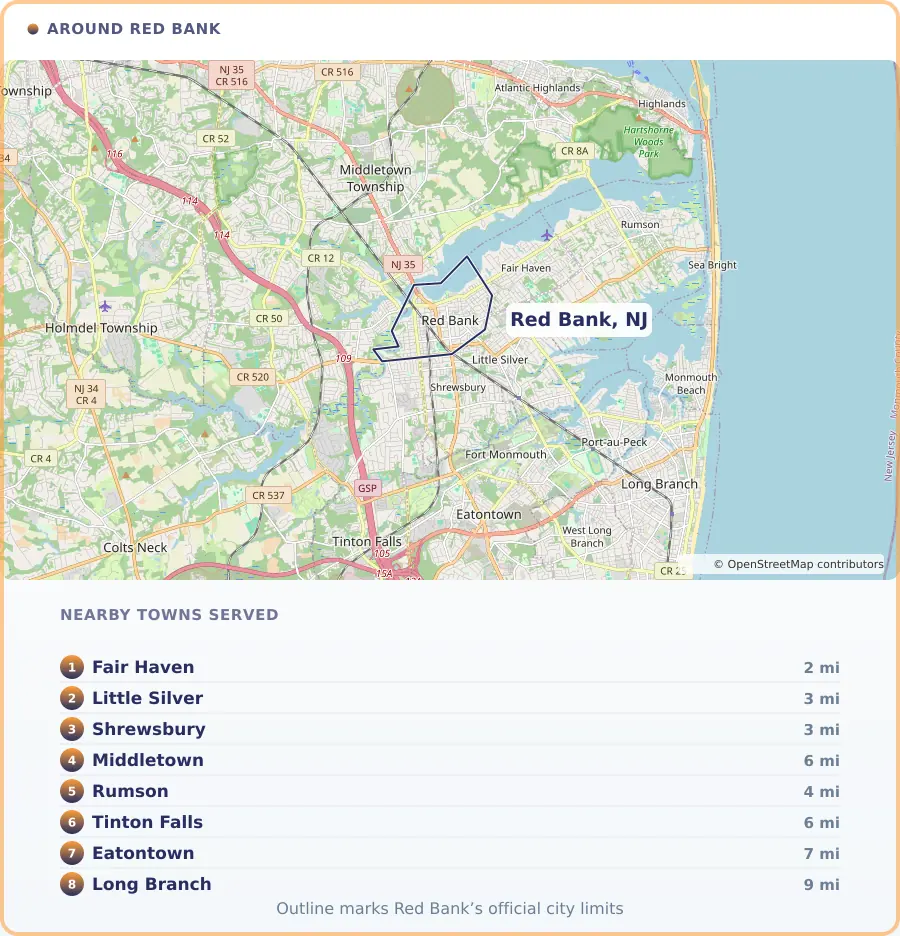
Coverage centres on Red Bank, NJ and reaches 8 surrounding communities. Response time is what matters most in the hours after a problem is found, so knowing the ground is part of the job.
Red Bank, NJ Information
Tucked along the Navesink River in Monmouth County, Red Bank, NJ packs a lot of personality into a small footprint. With roughly 12,248 residents, it carries itself like a much bigger town, thanks to a downtown built around Broad Street and Monmouth Street, where restaurants, boutiques, and live music spill out onto the sidewalks most evenings of the week.
The local economy leans on healthcare, arts, and steady professional services, with Riverview Medical Center and the Count Basie Center for the Arts serving as anchors that pull people in from across the region. Schools, real estate offices, and community institutions round things out, giving Red Bank the feel of a place that works hard and still knows how to enjoy a Friday night out.
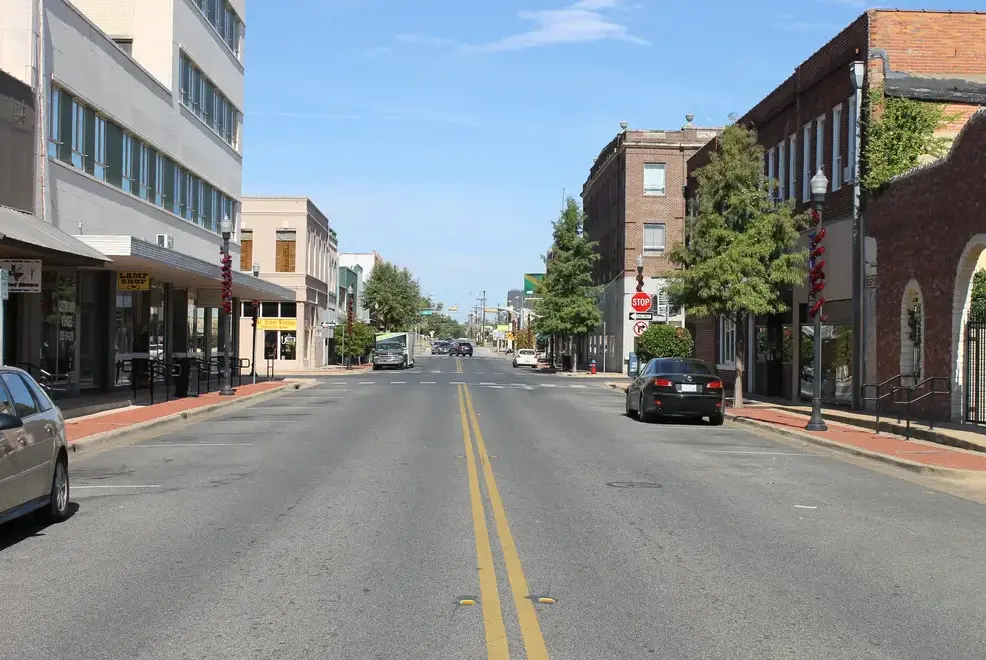
Photo: Billy Hathorn, CC BY-SA 3.0