

Ceiling Mold Removal in Red Bank, NJ
Red Bank's proximity to the Navesink River and year-round humid conditions create persistent moisture in many homes, particularly in older structures where basements and crawl spaces become damp environments ideal for mold growth. Ceiling mold often develops when moisture migrates upward through walls or accumulates in attic spaces, requiring prompt removal to protect indoor air quality and structural integrity. Tipton Mold Remediation connects Red Bank property owners with local independent providers who specialize in ceiling mold removal, ensuring the affected area is safely contained, thoroughly removed, and restored.
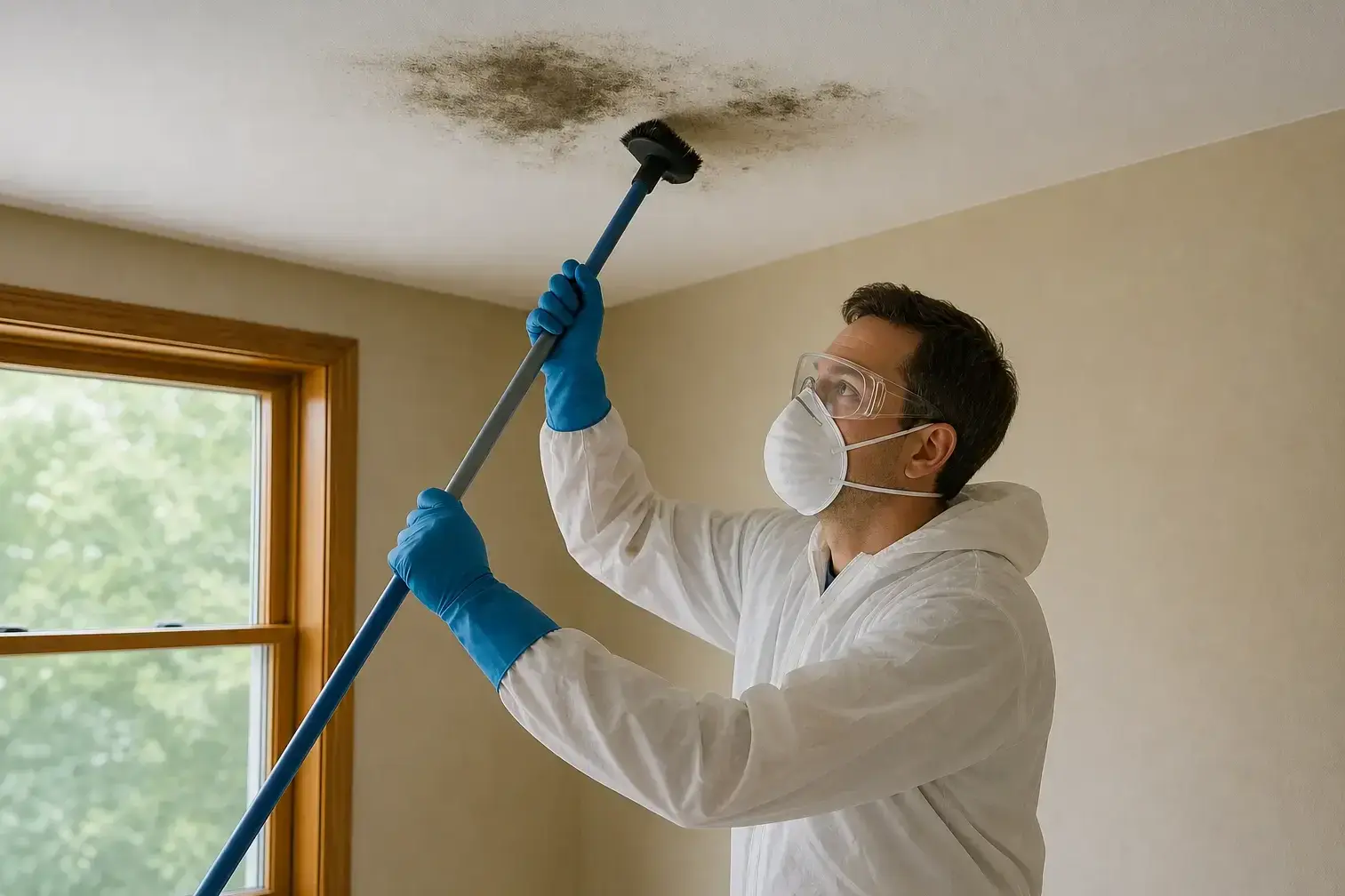
What gets cleaned on a ceiling, and what comes out
Two questions decide the scope of any mold job: what is it growing on, and how much of it is there. The EPA publishes an answer for both, and this is that guidance applied to the materials you would expect on a ceiling.
| Material | Under 10 sq ftabout a cabinet door, or one ceiling tile | 10 to 100 sq ftroughly one wall, or a small bathroom | Over 100 sq ftmore than one room's worth of surface |
|---|---|---|---|
| Wallboardthe ceiling drywall itselfEPA, Table 2 | HEPA vacuum | HEPA vacuumRemove and discard | HEPA vacuumRemove and discard |
| Wood surfacesjoists and framing in the cavity aboveEPA, Table 2 | Wet vacuumDamp wipeHEPA vacuum | Wet vacuumDamp wipeHEPA vacuum | Wet vacuumDamp wipeHEPA vacuumRemove and discard |
What those methods mean, in EPA's words
- Wet vacuum
Wet vacuums are vacuum cleaners designed to collect water. They can be used to remove water from floors, carpets and hard surfaces where water has accumulated.
EPA, cleanup methods- Damp wipe
Mold can generally be removed from nonporous (hard) surfaces by wiping or scrubbing with water, or water and detergent.
EPA, cleanup methods- HEPA vacuum
HEPA (High-Efficiency Particulate Air) vacuums are recommended for final cleanup of remediation areas after materials have been thoroughly dried and contaminated materials removed.
EPA, cleanup methods- Remove and discard
Building materials and furnishings that are contaminated with mold growth and are not salvageable should be double-bagged using 6-mil polyethylene sheeting.
EPA, cleanup methods
Removed and replaced, whatever the area
- Ceiling tiles — drop-ceiling or acoustic tiles.
Discard and replace.
EPA, Table 1This is the action EPA's water-damage table gives for ceiling tiles. It is the one material here with no size threshold to weigh. - Fiberglass or other insulation — any insulation sitting on top of the ceiling.
Fiber glass, or any other insulation material that is wet or visibly moldy (or if an unacceptable odor is present) should be removed and replaced by a qualified heating and cooling system contractor.
EPA, air duct cleaningEPA states this in its heating-and-cooling guidance and it is quoted here as written. Its water-damage table reaches the same conclusion for both fiberglass and cellulose insulation.
These guidelines are for damage caused by clean water. If you know or suspect that the water source is contaminated with sewage, or chemical or biological pollutants, then Personal Protective Equipment and containment are required by OSHA.
EPA, Table 1Porous materials that are wet and have mold growing on them may have to be discarded.
EPA, cleanup methodsMold can grow on wood, drywall, carpet and furniture if they remain wet for more than 24 hours.
EPA, flood cleanup
Ceiling mold nearly always means water arriving from above — a roof, a supply or waste line, or a bathroom on the floor above. The ceiling is the symptom, so cleaning it without finding the source buys a few months at most. Drop-ceiling tile is the one material here with no decision to make: EPA's water-damage table lists it as discard and replace.
Red Bank gets around 13.6 days a year with an inch or more of rain, most of them in October — and a downpour finds a flashing or a seal that a drizzle never would.Source: NOAA 1991-2020 Climate Normals, NEW YORK CNTRL PK TWR, NY US station (5.7 mi from Red Bank)
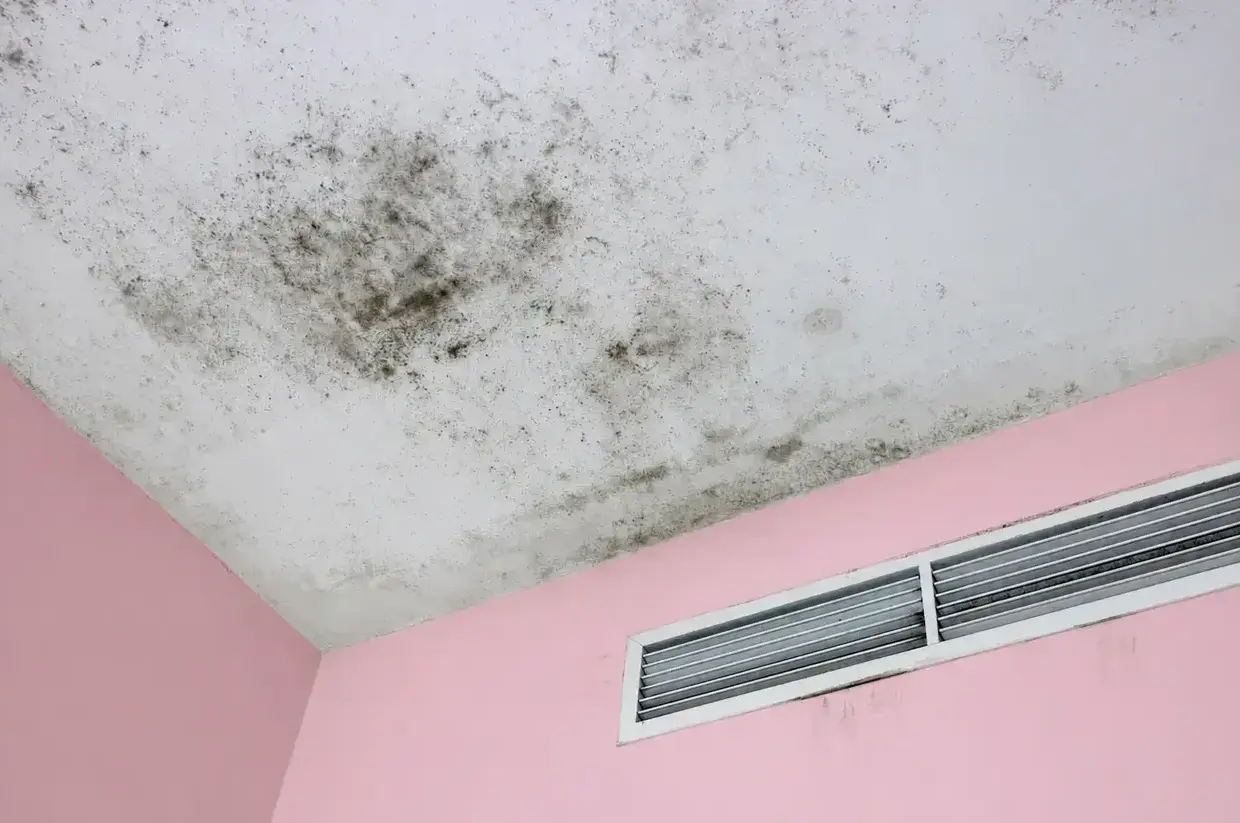
Ceiling Mold Removal Solutions for Red Bank Homeowners
Red Bank's location near the Navesink River and year-round humidity create persistent moisture conditions that make homes vulnerable to indoor mold growth. Older properties throughout the area often have basements and crawl spaces where dampness accumulates, and this trapped moisture can work its way upward into walls, attics, and ceilings—where it remains hidden until visible growth appears. Ceiling mold is particularly concerning because it can spread across structural materials and compromise indoor air quality while remaining out of sight. When moisture-laden air rises through a home, ceilings become a natural collection point, especially in areas with poor ventilation or where roof leaks, pipe condensation, or plumbing issues go unaddressed.
Tipton Mold Remediation connects Red Bank property owners with independent local providers who specialize in identifying and removing ceiling mold safely and thoroughly. These professionals assess the full extent of growth, locate the moisture source driving it, and work to eliminate both the visible mold and the conditions allowing it to persist. A complete approach includes proper containment to prevent spore spread, careful removal of affected materials, and strategies to reduce humidity and improve airflow—addressing not just the ceiling itself but the underlying causes. By partnering with providers in your area, you gain access to thorough inspection, removal tailored to your home's specific conditions, and follow-up guidance to help prevent recurrence and protect your family's health.
Why Red Bank Property Owners Choose Tipton Mold Remediation
Ceiling Mold Removal Expertise
Tipton connects you with local providers experienced in identifying and removing ceiling mold across Red Bank homes. They understand how moisture patterns affect overhead surfaces and deliver solutions tailored to your property's needs.
Fast Ceiling Mold Assessment
When you contact Tipton about ceiling mold, local providers respond promptly to inspect affected areas. Quick evaluation helps prevent further moisture damage and indoor air quality decline in your Red Bank home.
Thorough Ceiling Mold Removal
Tipton's network providers address ceiling mold with careful containment and complete removal techniques. Clear communication throughout the process keeps you informed about findings, treatment steps, and follow-up care.
Red Bank's Year-Round Humidity Challenge
Red Bank's consistently elevated moisture levels—sustained well beyond seasonal peaks—create persistent conditions for ceiling mold growth. Tipton connects you with local providers who understand this ongoing humidity risk and deliver targeted removal solutions.
How The Ceiling Mold Removal Process Works
Schedule Your Ceiling Mold Removal Inspection
Contact Tipton Mold Remediation to arrange a ceiling mold inspection with a local provider in Red Bank, NJ. The inspector will assess the extent of ceiling mold growth and identify moisture sources driving the problem.
Receive Your Ceiling Mold Removal Plan
The inspector documents the affected ceiling area and outlines a safe removal strategy tailored to your home. Red Bank's year-round humid conditions create persistent moisture that often feeds ceiling mold, especially in older homes where dampness originates in lower levels and rises upward.
Complete Ceiling Mold Removal and Moisture Control
The local remediation provider removes mold-affected ceiling material using proper containment and safely disposes of it. Follow-up moisture control measures help prevent ceiling mold from returning by addressing the underlying humidity that sustains it.
Dealing with Ceiling Mold Removal in Red Bank? Get fast, professional help.
Call Now — (732) 301-9822Ceiling Mold Removal Serving Red Bank
Red Bank's proximity to the Navesink River creates persistently humid conditions that extend well beyond seasonal storms, keeping indoor moisture levels elevated throughout much of the year. This steady atmospheric humidity is a primary driver of ceiling mold growth in the borough's homes and businesses. When combined with typical indoor sources—roof leaks, plumbing issues, or inadequate attic ventilation—the region's moisture-rich air creates ideal conditions for mold to take hold in ceiling cavities and overhead spaces where it often goes unnoticed until visible discoloration or soft spots appear.
Ceiling mold removal in Red Bank requires local providers who understand how the area's climate interacts with building envelope vulnerabilities. Many of the borough's older homes, which commonly feature basements and crawl spaces prone to dampness, often develop moisture problems that travel upward through wall cavities and into upper-floor ceilings and attics. Early detection and thorough removal by independent local providers familiar with these patterns help protect indoor air quality and prevent structural damage. Tipton Mold Remediation connects Red Bank property owners with experienced local removal specialists who can assess ceiling mold damage and recommend containment and remediation strategies tailored to the area's humidity challenges.
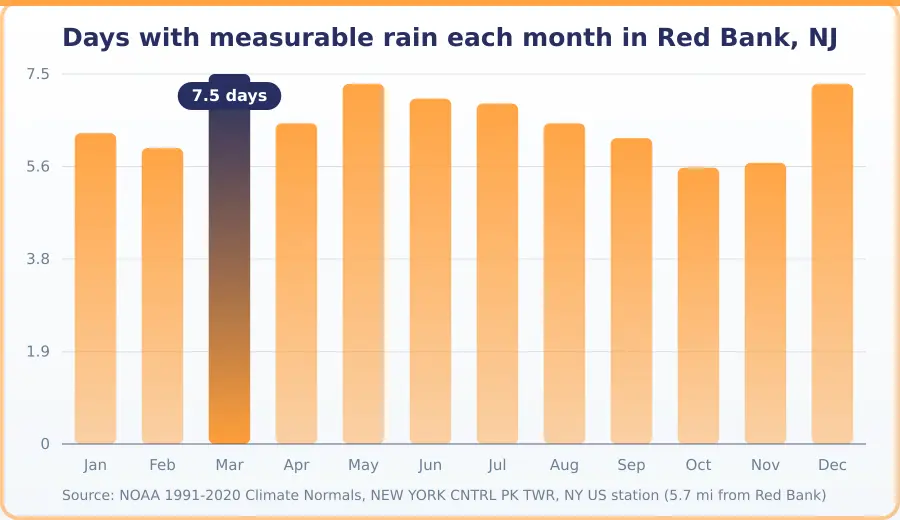
| Period | Days with measurable rain by month (days) |
|---|---|
| Jan | 6.3 |
| Feb | 6 |
| Mar | 7.5 |
| Apr | 6.5 |
| May | 7.3 |
| Jun | 7 |
| Jul | 6.9 |
| Aug | 6.5 |
| Sep | 6.2 |
| Oct | 5.6 |
| Nov | 5.7 |
| Dec | 7.3 |
Source: NOAA 1991-2020 Climate Normals, NEW YORK CNTRL PK TWR, NY US station (5.7 mi from Red Bank). Retrieved October 5, 2026.
Seasonal Ceiling Mold Removal Needs in Red Bank, NJ
Spring: Rising Moisture & Ceiling Growth
Spring warming accelerates evaporation from damp basement and crawl spaces, driving moisture upward into ceiling cavities and attic framing where mold colonizes wood and insulation. Tipton connects Red Bank property owners with local removal providers who identify and contain active spring ceiling mold before warmer months amplify spore dispersal indoors.
Summer: Heat-Driven Mold Acceleration
Elevated summer temperatures speed mold metabolism and reproduction on ceilings, particularly where humidity remains high from ambient moisture saturation near the Navesink River region. Our network links homeowners to independent local inspectors who can document ceiling mold extent and recommend safe removal protocols tailored to summer conditions.
Fall: Seasonal Humidity Peaks
Fall rainfall combines with cooling air to trap moisture indoors, keeping ceiling cavities damp and conducive to mold growth—a common problem in older Red Bank homes where basements and crawl spaces allow ground moisture to migrate upward. Tipton helps property owners connect with nearby remediation specialists equipped to address ceiling mold before winter containment becomes harder.
Winter: Cold-Weather Condensation Risks
Winter temperature swings create condensation on cold ceiling surfaces and in attic spaces, fostering mold growth even as outdoor humidity drops. Tipton's referral network helps Red Bank residents reach independent local providers who can safely assess and remove ceiling mold while minimizing disruption during the heating season.
Related Services
Ceiling Mold Removal FAQs — Red Bank, NJ
Ceiling mold removal typically begins with inspection to identify the extent of mold and locate moisture sources. The local provider will contain the affected area, remove contaminated materials safely, dry the ceiling thoroughly, and treat surfaces to prevent regrowth. The specific approach depends on whether mold is surface-level or has penetrated structural materials. Tipton Mold Remediation connects you with independent local providers in Red Bank who handle this work.
Response time varies by provider availability and the scope of your ceiling mold issue. Tipton Mold Remediation works to connect Red Bank property owners with independent local providers promptly, so you can schedule inspection and removal without unnecessary delay. Contact us with details about your situation, and we'll help link you to a responsive provider in your area.
Ceiling mold removal pricing depends on the affected area size, mold depth, whether structural materials require replacement, and accessibility. Moisture source repairs—such as roof or plumbing fixes—may add to the overall cost. The independent providers Tipton Mold Remediation connects you with will assess your specific ceiling and provide pricing based on your actual conditions.
Before removal begins, move valuables and furniture away from the work area. Discuss containment procedures with your provider to minimize disruption. You may need to vacate temporarily depending on mold severity and the materials being removed. Your provider will explain safety precautions and any preparation steps specific to your ceiling situation. Tipton connects you with local providers who'll walk you through expectations.
After removal, control indoor moisture by fixing roof leaks, ensuring gutters drain properly, and maintaining good ventilation. Monitor humidity levels, especially in bathrooms and kitchens. Address any dampness in basements or crawl spaces, since moisture that starts below can eventually rise and affect ceilings. Your removal provider can recommend moisture-control steps tailored to your home's layout and vulnerabilities.
Red Bank's proximity to the Navesink River and elevated ambient moisture throughout much of the year create conditions favorable for mold growth on ceilings. Older homes with basements or crawl spaces prone to dampness are especially vulnerable, since moisture can travel upward and support mold development in upper areas. Controlling foundation-level dampness helps reduce mold risk at the ceiling level.
Homeowner Safety Toolkit
Verify Your Red Bank, NJ Mold Remediation Company
Before you hire anyone, use these independent national resources to confirm credentials, standards, and track record.
ACAC
An independently accredited certifying body for mold inspectors and consultants — one of the few in this field whose standards are verified by an outside accreditation board, not just self-declared.
Find a Certified InspectorEPA
The federal government's own guidance on identifying, cleaning up, and preventing mold growth in a home.
Mold Prevention GuideBBB
Look up any mold remediation company's complaint history, customer reviews, and accreditation status — a free, independent check before you hire.
Check StandingDealing with Ceiling Mold Removal in Red Bank, NJ? Call (732) 301-9822 for 24/7 help.
Call Now — (732) 301-9822Areas We Serve in Red Bank, New Jersey
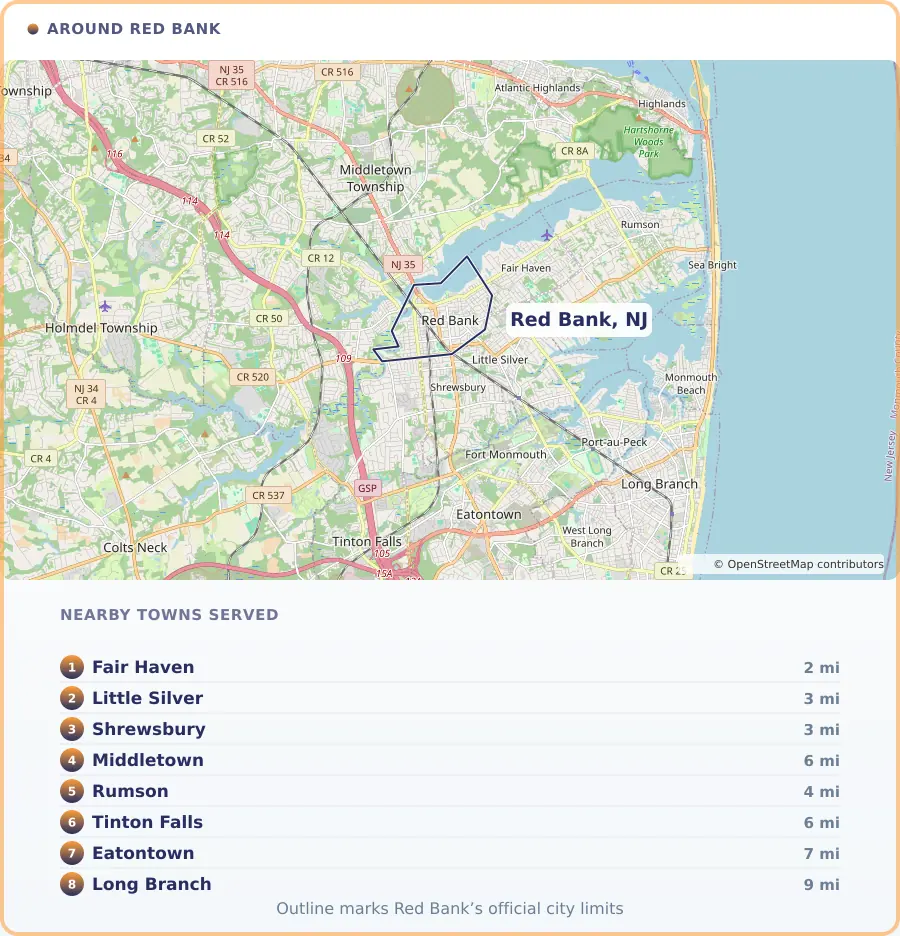
Coverage centres on Red Bank, NJ and reaches 8 surrounding communities. Response time is what matters most in the hours after a problem is found, so knowing the ground is part of the job.
Red Bank, NJ Information
Tucked along the Navesink River in Monmouth County, Red Bank, NJ packs a lot of personality into a small footprint. With roughly 12,248 residents, it carries itself like a much bigger town, thanks to a downtown built around Broad Street and Monmouth Street, where restaurants, boutiques, and live music spill out onto the sidewalks most evenings of the week.
The local economy leans on healthcare, arts, and steady professional services, with Riverview Medical Center and the Count Basie Center for the Arts serving as anchors that pull people in from across the region. Schools, real estate offices, and community institutions round things out, giving Red Bank the feel of a place that works hard and still knows how to enjoy a Friday night out.

Photo: Billy Hathorn, CC BY-SA 3.0